
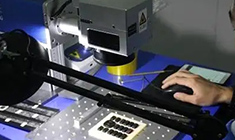
CNC Prototyping: How CNC Machining Supports Faster Product Development
Product development often requires several rounds of testing before a design is ready for production. A prototype gives engineers and designers a physical part that can be inspected, assembled, tested, and improved before larger quantities are manufactured. Among the available prototyping methods, CNC prototyping is particularly useful when dimensional accuracy, functional testing, and material characteristics are important.
What Is CNC Prototyping?
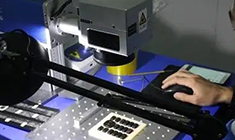
CNC prototyping is the process of using CNC machine tools to manufacture physical prototype parts from a digital design. Instead of evaluating a product only through drawings or computer models, engineers can obtain a physical component that represents the intended design.
This makes CNC prototyping useful during the early stages of product development. A prototype can help identify dimensional problems, design flaws, assembly issues, and other problems before the product enters larger-scale manufacturing.
DDM describes prototype manufacturing as an important stage for verifying product feasibility. Producing prototypes in small quantities allows designers to identify and correct problems before committing significant materials, labor, and production resources. :contentReference[oaicite:2]{index=2}
Why Use CNC Prototyping for Product Development?
A prototype is most valuable when it provides information that cannot be obtained from a digital model alone. CNC-machined prototypes can be used for appearance evaluation, assembly verification, and functional testing.
| Development Requirement | How a CNC Prototype Helps |
|---|---|
| Dimensional verification | Provides a physical part for checking critical dimensions. |
| Assembly testing | Allows components to be assembled and checked for fit. |
| Functional testing | Creates a physical component for practical evaluation. |
| Appearance evaluation | Allows designers to evaluate the actual shape, finish, and appearance. |
| Design improvement | Problems found during testing can be addressed before further production. |
CNC Prototyping vs. 3D Printing
CNC machining is not the only option for prototype manufacturing. 3D printing can also be useful for quickly producing physical models, particularly when complex geometries or rapid visual evaluation are required.
DDM provides both CNC Machining Prototypes and 3D printing processes including SLA and SLS. This gives product developers different options depending on the purpose of the prototype. :contentReference[oaicite:3]{index=3}
| Factor | CNC Prototyping | 3D Printing |
|---|---|---|
| Dimensional accuracy | Well suited to accurate machined parts | Depends on printing technology and material |
| Material selection | Metal and engineering plastic options | Depends on the printing process |
| Functional testing | Suitable when actual material properties are important | Depends on the selected printing material |
| Surface finishing | Supports a wide range of finishing processes | May require additional finishing |
The best method depends on what the prototype needs to demonstrate. If the goal is to evaluate the appearance of a basic concept, rapid 3D printing may be appropriate. If the prototype needs to closely represent a final machined component, CNC prototyping can provide a more relevant physical reference.
When Should You Choose CNC Prototyping?
CNC prototyping is especially useful when the prototype needs to represent the dimensions, material, and physical characteristics of a future production component.
When accurate dimensions need to be verified.
When multiple components need to be assembled together.
When a prototype needs to undergo functional testing.
When the final product will use machined metal or engineering plastic components.
When surface appearance and finishing need to be evaluated.
When a prototype needs to transition into small-batch manufacturing.
Materials for CNC Prototypes
Material selection should be considered together with the purpose of the prototype. Different materials provide different levels of strength, weight, appearance, chemical resistance, and machinability.
DDM lists a broad selection of metal materials including aluminum, stainless steel, steel, brass, bronze, titanium, and carbon steel. Its available plastic materials include ABS, nylon, PA, PC, PEEK, PMMA, POM, PP, and other engineering plastics. :contentReference[oaicite:4]{index=4}
Metal CNC Prototypes
Metal prototypes are useful when the final component is expected to have structural strength or other characteristics associated with metal construction. Aluminum, stainless steel, titanium, brass, and other metals can be selected according to the application.
Plastic CNC Prototypes
Plastic prototypes can be useful for housings, structural components, electronic products, and other applications. Materials such as ABS, PC, POM, PA, and PMMA offer different combinations of mechanical and visual properties.
Surface Finishing for CNC Prototypes
A prototype does not always need to remain in its machined condition. Surface treatment can improve appearance, provide specific surface characteristics, or help the prototype more closely resemble the intended finished product.
DDM provides surface treatment options including grinding and polishing, sandblasting, anodizing, hard anodizing, powder coating, painting, electroplating, laser engraving, screen printing, and other processes. :contentReference[oaicite:5]{index=5}
For example, anodizing can be considered for aluminum components, while polishing can be used when a smoother surface is required. The appropriate treatment should be selected according to the material, appearance requirements, and intended application.
From CNC Prototype to Small-Batch Production
One of the advantages of developing a prototype through a manufacturing process is that the prototype can provide information for later production. Once dimensions, assembly, function, and appearance have been verified, the design can move toward further manufacturing stages.
DDM specializes in rapid prototyping and small-batch production of high-precision non-standard parts. Its stated manufacturing process includes communication, research and design evaluation, production, testing, and delivery. :contentReference[oaicite:6]{index=6}
This type of workflow can reduce the gap between prototype development and production because the design is evaluated within an actual manufacturing environment.
How to Prepare a CNC Prototype Project
A well-prepared project can make the prototyping process more efficient. Before requesting a quote, product developers should prepare the available design information and clearly communicate the purpose of the prototype.
Prepare the 3D model or technical drawings.
Identify the required material.
Define critical dimensions and tolerances.
Specify surface finish requirements.
Confirm the required prototype quantity.
Explain whether the prototype requires assembly or functional testing.
DDM's contact page specifically invites customers to provide product design drawings so its technical team can provide manufacturing support for new projects. :contentReference[oaicite:7]{index=7}
Choosing a CNC Prototyping Manufacturer
The quality of a prototype depends not only on the CNC machine but also on engineering evaluation, material selection, machining capability, inspection, and finishing. When comparing a machining manufacturer, buyers should consider whether the supplier can support the complete development process rather than simply producing a single machined part.
DDM states that it has more than 100 CNC processing centers and a team of more than 105 engineers and technical specialists. Its inspection equipment includes two-dimensional and three-dimensional inspection equipment, salt spray testers, spectrometers, roughness meters, colorimeters, and other equipment. :contentReference[oaicite:8]{index=8}
For product developers, these capabilities can be relevant when a prototype needs not only to look correct but also to meet defined dimensional and quality requirements.
Applications of CNC Prototypes
Prototype Models can be used across many industries. DDM lists automotive, jewelry and ornaments, artificial intelligence, medical and healthcare, electronic products, and aerospace among its prototype application fields. :contentReference[oaicite:9]{index=9}
The specific prototype requirements can vary considerably between industries. An automotive component may focus on dimensional accuracy and assembly, while an electronic housing may place greater emphasis on appearance, fit, surface finish, and material selection.
Conclusion
CNC prototyping provides product developers with a practical way to turn digital designs into accurate physical parts for evaluation. It can support dimensional verification, appearance evaluation, assembly testing, and functional testing before a product moves into larger-scale manufacturing.
By selecting the right material, machining process, surface treatment, and inspection method, manufacturers can create prototypes that provide useful information for the next stage of product development. For companies developing high-precision custom parts, combining prototype machining with small-batch production can also create a more direct path from design verification to manufacturing.
If you are developing a new product and need a CNC prototype, providing the design drawings, material requirements, critical dimensions, quantity, and finishing requirements can help the manufacturing team evaluate the project and recommend an appropriate production solution.