
Injection Molding: A Practical Guide to Mold Design and Production
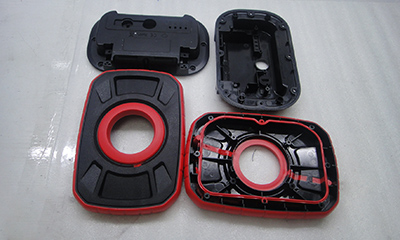
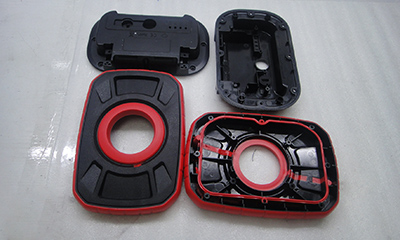
Injection Molding is one of the most widely used manufacturing processes for producing consistent plastic components at scale. By injecting molten material into a precision mold, manufacturers can create parts with complex shapes, accurate dimensions, and repeatable quality.
For custom plastic products, understanding the relationship between mold design, material selection, and machine setup is essential for achieving stable production and reducing manufacturing problems.
How Does Injection Molding Work?
The basic Injection Molding process starts by heating plastic material until it reaches a suitable molten state. The material is then injected into a closed mold under controlled pressure. After the plastic fills the cavity and cools, the mold opens and the finished part is ejected.
The entire cycle can be repeated many times, making the process suitable for both prototypes and high-volume production.
The Importance of Mold Design
Mold design has a direct influence on the quality and efficiency of Injection Molding. Factors such as cavity structure, gate position, cooling channels, draft angles, and parting lines need to be considered before manufacturing the mold.
A well-designed mold helps achieve uniform filling and cooling while reducing defects such as warping, shrinkage, short shots, and surface imperfections.
Choosing the Right Material
Different applications require different plastic materials. Material selection should take into account mechanical strength, temperature resistance, chemical resistance, appearance, and the intended working environment.
For this reason, injection molding of plastics is not simply a matter of selecting a mold and a machine. The material and processing parameters must work together to meet the requirements of the finished component.
Injection Molding Machine and Process Control
The injection machine moulding process requires accurate control of injection pressure, temperature, injection speed, holding pressure, and cooling time. Selecting a suitable injection mold machine according to the part size, material, and production volume helps maintain stable processing conditions.
Consistent process control is particularly important for custom components, where dimensional accuracy and repeatability are often critical.
Applications of Injection Molding
Injection molding can be used for a wide range of products and components, including automotive parts, electronic housings, consumer products, industrial components, and customized plastic products.
When complex geometries or customized structures are required, precision mold design combined with controlled injection molding can provide an efficient solution for producing repeatable parts.
Why Work With an Experienced Mold Manufacturer?
Successful injection molding depends on more than the molding machine itself. Mold design, machining accuracy, material selection, testing, and production control all affect the final result.
Working with an experienced mold manufacturer allows these factors to be considered together from the early design stage through final production. This can help reduce development risks and improve the consistency of customized plastic parts.
Conclusion
Injection molding provides an efficient way to manufacture accurate and repeatable plastic components. From mold design and material selection to machine setup and quality control, each stage plays an important role in achieving reliable production results.
For businesses developing customized plastic products, choosing the right mold design and manufacturing partner is an important step toward efficient and stable production.
```