
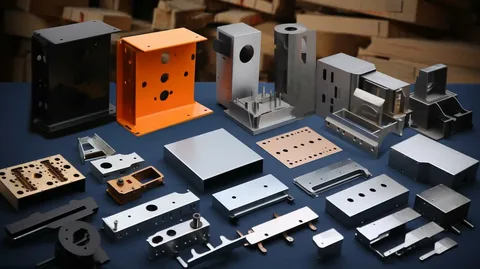
How Does Sheet Metal Fabrication Work?
How Does Sheet Metal Fabrication Work? From Cutting to Finished Parts
Sheet metal fabrication is a manufacturing process used to turn flat metal sheets into finished components through cutting, bending, forming, joining, and surface finishing. It is widely used for equipment enclosures, brackets, panels, frames, covers, electronic housings, machine components, and custom industrial parts.
But how does sheet metal fabrication work in practice? A typical project starts with a CAD drawing and material selection, followed by precision cutting, bending or forming, assembly, surface treatment, inspection, and final delivery.
For manufacturers and engineering teams, understanding each stage helps improve part design, control manufacturing costs, and select the right fabrication process for prototypes, small batch production, or larger production runs.
What Is Sheet Metal Fabrication?
Sheet metal fabrication is the process of manufacturing parts from flat metal sheets. Unlike machining, which removes material from a solid block, sheet metal fabrication generally starts with a thin metal sheet and uses cutting and forming processes to create the required geometry.
Depending on the part design, a sheet metal fabrication project may include:
CAD design and engineering review
Material selection
Laser cutting of metal sheets
Hole and feature cutting
Sheet metal bending and forming
Welding or mechanical assembly
Surface treatment and finishing
Dimensional inspection and quality control
The exact process depends on the material, thickness, geometry, tolerance, quantity, appearance requirements, and intended application.
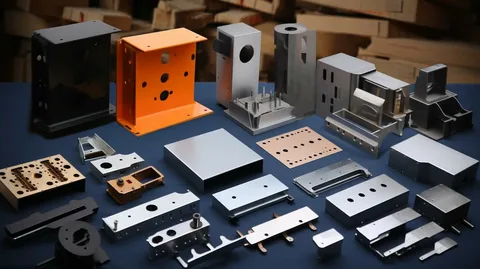
How Does Sheet Metal Fabrication Work?
Although fabrication methods vary between projects, the manufacturing workflow can generally be divided into several key stages.
1. Start with CAD Design and Engineering Review
The first step is to create or review the digital design of the sheet metal part. Engineers normally provide a 2D drawing, 3D CAD model, or both.
Before production begins, the manufacturer evaluates the design for manufacturability. Important factors include sheet thickness, bend radius, hole size, distance between features, bend direction, tolerances, and material selection.
A proper design review can identify potential manufacturing problems before material is cut. This is particularly important for custom sheet metal parts and prototypes, where design changes may occur during product development.
2. Select the Right Sheet Metal Material
Material selection affects strength, weight, corrosion resistance, appearance, cost, and fabrication performance.
Common sheet metal materials include:
Stainless steel
Carbon steel
Steel
Aluminum
Brass
Alloy steel
The best material depends on the application. For example, aluminum may be selected when low weight is important, while stainless steel can be suitable when corrosion resistance and durability are required.
DDM Parts provides a range of metal materials for custom manufacturing and can support material selection according to project requirements. Explore Materials & Surface Treatment.
3. How to Cut Sheet Metal
One of the most important stages is cutting the flat sheet into the required shape. If you are searching for how to cut sheet metal, the answer depends on the material, thickness, geometry, required tolerance, and production volume.
For precision custom parts, laser cutting is one of the common approaches. A focused laser beam follows the programmed cutting path and separates the required geometry from the sheet.

Laser Cutting of Metal Sheets
Laser cutting of metal sheets is particularly useful when the design contains complex profiles, holes, slots, or detailed contours. The process is controlled using digital CAD data, allowing the same design to be reproduced consistently.
DDM Parts currently lists Laser Cutting as one of its sheet metal fabrication processes and states a tolerance capability of up to ±0.1 mm for the process. View DDM Parts Sheet Metal Processing.
Laser cutting can be suitable for:
Custom brackets
Metal panels
Machine covers
Electronic enclosures
Mounting plates
Equipment frames
Prototype sheet metal parts
Small batch components
4. Bending and Forming
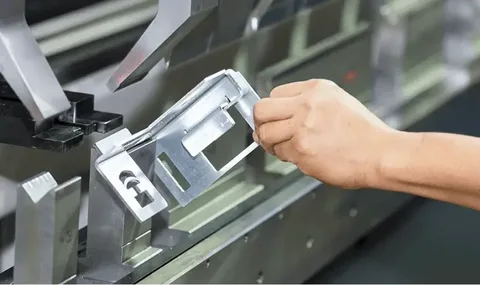
After cutting, many sheet metal parts need to be bent into a three-dimensional shape. Bending changes the angle of the material without completely separating it.
Typical bending considerations include:
Material thickness
Bend angle
Inside bend radius
Bend allowance
Tool selection
Required dimensional tolerance
Accurate bending is important because small dimensional errors can affect the assembly of the final product. DDM Parts lists Metal Bending as another sheet metal fabrication process, with a stated tolerance capability of up to ±0.1 mm. Learn More About Metal Bending.
5. Welding and Assembly
Some sheet metal products consist of multiple fabricated pieces. After cutting and bending, individual components may need to be joined through welding or other assembly methods.
Welding can create a permanent connection between components and is commonly considered when the final product requires structural strength or a rigid assembly.
The required joining method depends on the material, joint design, appearance requirements, strength requirements, and production quantity.
6. How to Trim Sheet Metal
After cutting, forming, or welding, additional trimming and edge finishing may be required. When considering how to trim sheet metal, the main objective is usually to remove unwanted material, burrs, sharp edges, or excess material while maintaining the required dimensions.
Edge finishing is especially important for parts that will be handled by operators or assembled with other components. It can also improve the appearance of the finished part and prepare the surface for subsequent finishing processes.
7. Surface Treatment and Finishing
Sheet metal fabrication does not necessarily end after cutting and bending. Many parts require additional surface treatment to improve appearance, corrosion resistance, wear resistance, or functional performance.
Depending on the material and application, possible treatments include:
Powder coating
Paint spraying
Brushing
Sandblasting
Anodizing
Electroplating
Passivation
Heat treatment
Laser engraving
DDM Parts provides customized surface treatment services according to product design requirements, including anodizing, powder coating, sandblasting, polishing, plating, laser engraving, and other finishing processes. See Materials & Surface Treatment Services.
8. Inspection and Quality Control
Inspection is the final manufacturing stage before parts are delivered to the customer. Dimensional inspection verifies whether the finished components meet the requirements specified in the technical drawing.
Depending on the project, inspection may include checking:
Overall dimensions
Hole diameter and position
Bend angles
Flatness
Surface quality
Material requirements
Critical tolerances
Assembly fit
For high-precision custom parts, inspection should be considered throughout the manufacturing process rather than only at the final stage.
For projects requiring strict dimensional control, customers can also review DDM Parts' Inspection Center to learn more about its quality inspection capabilities.
What Types of Parts Can Be Made with Sheet Metal Fabrication?
Sheet metal fabrication is suitable for many custom industrial and commercial components. The process can produce both simple flat parts and complex formed assemblies.
Equipment enclosures
Electrical cabinets
Electronic housings
Machine covers
Mounting brackets
Metal panels
Frames and supports
Chassis components
Protective covers
Custom prototype parts
Sheet Metal Fabrication for Prototypes and Small Batch Production
Sheet metal fabrication is often useful during product development because it allows engineers to produce physical parts without investing in dedicated production tooling for every design.
For prototypes, manufacturers can use the customer's CAD files to produce representative components for dimensional checks, assembly testing, functional evaluation, and design verification.
The same manufacturing approach can also support small batch production when the required quantity does not justify more expensive dedicated tooling.
DDM Parts specializes in high-precision custom parts, rapid prototyping, and small-batch and mass production, allowing customers to move from prototype development toward production through one manufacturing partner.
For projects that begin with a prototype, you can also explore the Prototype Model service.
Sheet Metal Fabrication vs CNC Machining
Sheet metal fabrication and CNC machining can both produce custom metal parts, but they start with different manufacturing approaches.
Sheet metal fabrication: starts with flat sheet material and uses cutting, bending, forming, and joining.
CNC machining: removes material from a solid workpiece using controlled cutting tools.
Sheet metal fabrication is often advantageous for thin-walled panels, enclosures, brackets, covers, and formed components. CNC machining can be more suitable for solid components, complex 3D geometries, tight machining tolerances, and parts requiring extensive material removal.
When choosing between the two, consider part geometry, wall thickness, tolerance, material, quantity, production cost, and functional requirements.
For precision machined components, see DDM Parts' Precision CNC Machining service.
How to Choose a Sheet Metal Fabrication Manufacturer
Choosing the right manufacturing partner can have a significant impact on part quality, delivery time, and overall project cost.
Before placing an order, consider the following:
Available sheet metal materials
Laser cutting and bending capabilities
Dimensional tolerance requirements
Surface treatment options
Inspection and quality control procedures
Prototype and small batch capabilities
Production capacity
Engineering and technical support
Communication and quotation efficiency
It is also useful to provide a complete CAD file, technical drawing, material specification, required quantity, surface finish, tolerance requirements, and expected delivery schedule when requesting a quotation.
Get Custom Sheet Metal Parts from DDM Parts
Understanding how sheet metal fabrication works makes it easier to select the right process for your project. From CAD design and material selection to how to cut sheet metal, bending, trimming, welding, surface treatment, and inspection, each step contributes to the quality of the finished component.
DDM Parts provides custom sheet metal fabrication for prototypes, small batch production, and production parts. Its current sheet metal service includes laser cutting and metal bending, with additional post-processing options available according to project requirements.
Need Custom Sheet Metal Parts?
Send your CAD drawings, material requirements, quantity, tolerances, and surface finish requirements to DDM Parts. Our engineering team can review your project and provide a manufacturing solution and quotation.
Get a professional quotation for your sheet metal fabrication project.
Frequently Asked Questions
What is sheet metal fabrication used for?
Sheet metal fabrication is used to manufacture brackets, panels, enclosures, frames, covers, chassis components, equipment housings, and many other custom metal parts.
How is sheet metal cut?
Sheet metal can be cut using different methods depending on the material, thickness, geometry, and tolerance requirements. Laser cutting is commonly used for precision profiles, holes, slots, and complex contours.
What is laser cutting of metal sheets?
Laser cutting of metal sheets uses a focused laser beam to cut a programmed profile from flat sheet material. It is suitable for producing accurate and repeatable custom sheet metal components.
Is sheet metal fabrication suitable for small batch production?
Yes. Sheet metal fabrication can be suitable for prototypes and small batch production because parts can often be produced directly from CAD drawings without dedicated production molds.