
What Is Anodizing and Why Is It Used for Aluminum Parts?
Aluminum is widely used for CNC machined parts, electronic housings, industrial components, automotive parts, and product prototypes because it is lightweight, machinable, and corrosion resistant. However, the surface of an aluminum part can often be improved with the right finishing process.
This is where anodizing becomes useful. If you are researching how to anodize aluminum, the process involves controlled electrochemical treatment that creates a protective oxide layer on the aluminum surface. Depending on the selected process, anodizing can improve corrosion resistance, wear resistance, appearance, and surface durability.
For manufacturers and product engineers, understanding the aluminum anodizing process can help when selecting materials, surface finishes, and manufacturing suppliers for custom aluminum parts.
What Is Aluminum Anodizing?
Aluminum anodizing is an electrochemical surface treatment used to form a controlled oxide layer on aluminum and aluminum alloys. Unlike a coating that is simply applied to the outside of a part, anodizing changes the surface of the aluminum through an electrochemical reaction.
The resulting anodized layer can provide several benefits, including improved corrosion resistance, better wear resistance, enhanced surface appearance, and a suitable base for coloring or other finishing requirements.
DDM Parts lists Anodizing and Hard Anodizing among its surface treatment capabilities, along with Bead Blasting + Anodizing and other finishing processes. Explore Materials & Surface Treatment.
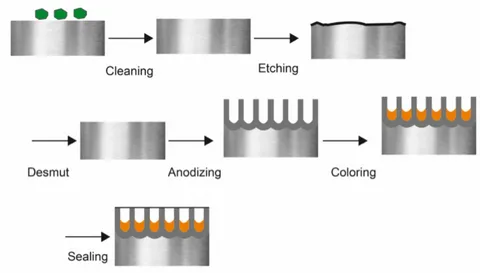
How to Anodize Aluminum: The Basic Process
The exact parameters of an anodizing process depend on the aluminum alloy, required appearance, oxide layer requirements, application, and production specifications. However, industrial aluminum anodizing generally follows several basic stages.
1. Clean the Aluminum Part
The first stage is cleaning the aluminum surface. Machining operations can leave behind cutting oil, grease, dirt, fingerprints, and other contaminants.
These contaminants can interfere with subsequent surface treatment and may cause inconsistent appearance or uneven anodizing. Thorough cleaning therefore provides a more consistent starting surface.
2. Prepare the Aluminum Surface
Surface preparation determines the appearance of the final anodized aluminum part. Depending on the project, the surface may be treated to achieve a specific texture, brightness, or visual effect.
For CNC machined aluminum parts, the original machining marks may remain visible after anodizing. If a smoother or more uniform appearance is required, additional processes such as grinding, polishing, or bead blasting may be considered before anodizing.
DDM Parts also lists Bead Blasting + Anodizing as a combined surface treatment option. This can be useful when both surface texture and anodized protection are required.
3. Anodize the Aluminum
The core of the aluminum anodizing process is an electrochemical reaction. The aluminum part is connected to an electrical circuit and placed in an appropriate electrolyte system. Under controlled electrical conditions, an oxide layer develops on the aluminum surface.
The process needs to be carefully controlled because factors such as alloy composition, electrical parameters, electrolyte conditions, processing time, and temperature can influence the resulting anodized layer and appearance.
For production parts, anodizing should therefore be performed according to defined process requirements rather than treated as a simple coating operation.
4. Coloring Anodized Aluminum
One reason anodizing is popular for product components is that the surface can be combined with coloring requirements. Color selection is particularly important for consumer products, electronic housings, visible mechanical components, and other parts where appearance matters.
The final color can be affected by the aluminum alloy, surface preparation, anodizing parameters, coloring process, and sealing conditions. Therefore, production parts should be evaluated against an approved sample or color specification when appearance consistency is important.
5. Seal the Anodized Surface
After anodizing and any required coloring, sealing can be used to close or reduce the porosity of the anodic oxide layer. This helps improve the performance and stability of the finished surface.
For commercial production, the appropriate sealing method should be selected according to the aluminum alloy, anodizing process, appearance requirements, and expected service environment.
6. Inspect the Finished Aluminum Parts
Inspection is an important part of anodizing production, particularly when anodized aluminum parts are used in precision assemblies or visible products.
Depending on the project requirements, quality control may include checking:
Part dimensions
Surface appearance
Color consistency
Surface defects
Critical features and tolerances
Surface roughness
Overall part conformity to the drawing
DDM Parts operates an Inspection Center equipped with systems and instruments including a 2D inspection system, three-dimensional inspection system, surface roughness tester, height gauge, color difference meter, and other inspection equipment. View the Inspection Center.
Why Anodize Aluminum?
Anodizing is selected for aluminum parts for both functional and visual reasons. The appropriate treatment depends on the application and the performance requirements of the finished component.
Improved Corrosion Resistance
Anodizing creates a controlled oxide layer that can improve the aluminum surface's resistance to environmental exposure and corrosion.
Better Wear Resistance
For components exposed to handling, friction, or repeated use, an anodized surface can provide improved wear resistance compared with untreated aluminum.
Improved Surface Appearance
Anodized aluminum can provide a clean and consistent appearance and can be produced in different surface finishes and colors according to project requirements.
Suitable for CNC Machined Parts
Anodizing is commonly considered for CNC machined aluminum components where both dimensional precision and surface appearance are important.
What Aluminum Parts Can Be Anodized?
Many aluminum components can be anodized when the material and design are suitable for the selected process. Typical examples include:
CNC machined aluminum parts
Electronic housings
Equipment covers
Automotive components
Mechanical components
Brackets and mounting parts
Product enclosures
Industrial equipment components
DDM Parts lists Aluminum among its standard metallic materials and supports customized material requirements for manufacturing projects.
Standard Anodizing vs Hard Anodizing
Not every aluminum component needs the same anodizing treatment. Standard anodizing and hard anodizing are selected according to the required performance and application.
| Feature | Standard Anodizing | Hard Anodizing |
|---|---|---|
| Main purpose | Surface protection and appearance | Higher-performance surface protection |
| Wear resistance | Suitable for general applications | Higher wear resistance |
| Typical applications | Visible parts, housings, general components | Wear-sensitive and demanding components |
| Selection | Appearance and general protection | Performance and durability requirements |
DDM Parts specifically lists Hard Anodizing as a surface treatment and notes benefits including corrosion resistance, wear resistance, weather resistance, insulation, and adhesion properties.
What Affects the Quality of Anodized Aluminum?
The final quality of anodized aluminum depends on more than the anodizing stage itself. Several factors should be controlled throughout manufacturing.
Aluminum alloy: Different alloys can produce different anodizing results.
Surface preparation: Cleaning, machining marks, polishing, and blasting can affect the final appearance.
Part geometry: Sharp edges, deep cavities, holes, and complex shapes can influence processing and appearance.
Process control: Consistent anodizing parameters are important for repeatable production.
Color requirements: Approved samples and color specifications can help control visual consistency.
Inspection: Dimensional and visual inspection helps verify the final part against customer requirements.
Anodizing for CNC Machined Aluminum Parts
CNC machining and anodizing are often combined when a project requires both precise geometry and a durable surface finish.
A typical project may follow this workflow:
Review the 2D drawing or 3D CAD model
Select the aluminum material
CNC machine the required geometry
Deburr and prepare the surface
Apply the specified anodizing treatment
Inspect dimensions and surface appearance
Package and deliver the finished components
This approach can be useful for prototypes, custom components, small batch production, and larger production requirements where consistent appearance and dimensional accuracy are important.
For precision aluminum components, learn more about Precision CNC Machining.
Anodizing vs Other Aluminum Surface Treatments
Anodizing is only one of several surface treatment options available for aluminum. The best choice depends on the required appearance, corrosion resistance, wear resistance, texture, cost, and application.
Anodizing: Suitable when an electrochemically formed oxide layer and controlled appearance are required.
Hard anodizing: Suitable when higher wear resistance and surface durability are important.
Bead blasting + anodizing: Can combine a textured surface with anodized protection.
Powder coating: Suitable when a thicker colored protective coating is required.
Polishing: Used when a smoother and brighter metal surface is required.
Electroplating: Used when a deposited metal layer is required for specific functional or decorative purposes.
DDM Parts provides a broad range of surface treatment options that can be customized according to product design specifications. Compare Materials & Surface Treatment Options.
When Should You Choose Anodizing?
Anodizing can be a good choice when an aluminum component needs a combination of surface protection and controlled appearance.
Consider anodizing when your project requires:
Improved corrosion resistance
Better surface durability
Improved wear resistance
A consistent aluminum surface finish
Colored aluminum parts
A surface treatment for CNC machined aluminum components
A professional appearance for visible product components
How to Choose an Aluminum Anodizing Service
When sourcing anodized aluminum parts, the surface treatment supplier should understand both the manufacturing and finishing requirements of your project.
Before requesting a quotation, prepare information such as:
3D CAD model or 2D engineering drawing
Aluminum alloy
Part dimensions
Required quantity
Anodizing type
Color requirement
Surface texture or appearance requirement
Critical dimensional tolerances
Inspection requirements
Providing complete specifications allows the manufacturer to evaluate machining, surface treatment, inspection, and production requirements together instead of treating anodizing as an isolated process.
Get Custom Anodized Aluminum Parts
Knowing how to anodize aluminum helps engineers and purchasing teams make better decisions when selecting a surface finish. From cleaning and surface preparation to anodizing, coloring, sealing, and inspection, each stage can affect the final appearance and performance of the aluminum part.
DDM Parts provides aluminum materials, CNC machining, anodizing, hard anodizing, bead blasting + anodizing, and inspection capabilities for custom manufacturing projects. The company specializes in high-precision custom parts, rapid prototyping, and small-batch and mass production.
Need Custom Anodized Aluminum Parts?
Send your CAD drawings, aluminum material, required anodizing finish, color, quantity, and tolerance requirements to DDM Parts. Our team can review your project and provide a suitable manufacturing and surface treatment solution.
Request a quotation for your custom aluminum parts today.
Frequently Asked Questions
How to anodize aluminum?
Industrial aluminum anodizing generally includes cleaning, surface preparation, electrochemical anodizing, optional coloring, sealing, and final inspection. The exact parameters depend on the aluminum alloy and required surface finish.
What is aluminum anodizing?
Aluminum anodizing is an electrochemical surface treatment that forms a controlled oxide layer on aluminum and aluminum alloys. It can improve corrosion resistance, wear resistance, and surface appearance.
Can CNC machined aluminum parts be anodized?
Yes. CNC machined aluminum parts can be anodized when the material and design are suitable for the selected process. Machining, surface preparation, anodizing, and inspection should be considered together when tight tolerances or appearance requirements are involved.
What is hard anodizing?
Hard anodizing is a higher-performance anodizing treatment used to improve properties such as wear resistance and corrosion resistance on suitable aluminum and aluminum alloy parts.
Does anodizing change the appearance of aluminum?
Yes. Anodizing can change the surface appearance of aluminum and may be combined with coloring and different surface preparation methods to achieve the required finish.