
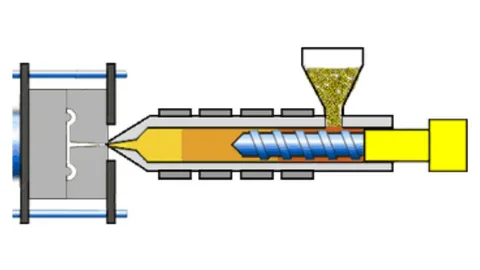
How Does Plastic Injection Molding Work?
How Does Plastic Injection Molding Work? A Practical Guide for Custom Plastic Parts
When you need hundreds, thousands, or even millions of identical plastic parts, plastic injection molding is one of the most efficient manufacturing methods available.
But how does injection molding actually work? More importantly, how do you know whether it is the right manufacturing process for your project?
This guide explains injection molding from a practical manufacturing and purchasing perspective, including how the machine works, what affects part quality, how to choose plastic materials, when to use injection molding instead of CNC machining, and what to consider when selecting an injection molding manufacturer.
1. What Happens Inside an Injection Molding Machine?
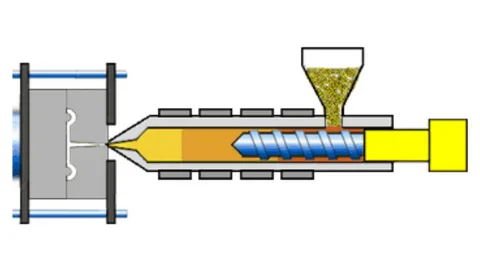
At its core, injection molding is a process that transforms plastic pellets into finished components through heat, pressure, and a specially designed mold.
The basic principle can be understood as:
Plastic Pellets → Heating → Injection → Mold Filling → Cooling → Ejection → Finished Part
The main components involved include:
Hopper: Holds the plastic pellets before processing.
Barrel: Heats and prepares the plastic material.
Screw: Moves and mixes the molten plastic.
Nozzle: Transfers molten plastic into the mold.
Mold: Contains the cavity that determines the shape of the final component.
Cooling system: Removes heat from the mold and plastic part.
Ejection system: Pushes the finished part out of the mold.
Unlike 3D printing, which builds a component layer by layer, injection molding fills a predefined cavity. Once the tooling has been properly developed, the same geometry can be reproduced repeatedly with high consistency.
2. Why Can Injection Molding Produce Thousands of Identical Parts?
One of the biggest advantages of injection molding is repeatability.
After the injection mold has been developed and production parameters have been established, manufacturers can repeatedly produce parts with the same basic geometry.
This makes injection molding particularly suitable for:
Automotive components
Electronic housings
Consumer products
Medical components
Industrial components
Appliance parts
Robotics components
Plastic mechanical parts
For high-volume projects, the initial tooling investment can be distributed across a large number of parts. As production volume increases, the tooling cost per component can become much lower.
For projects requiring custom tooling and production, DDM Parts' Injection Mold Manufacturing provides a manufacturing option for precision plastic components and production requirements.
3. What Determines the Quality of an Injection Molded Part?
Injection molding quality is not determined by the machine alone.
Several factors work together to determine the final result.
Mold Design
The mold controls the geometry of the finished component. Poor gate locations, inadequate cooling, difficult ejection, or insufficient draft angles can create production problems.
Plastic Material
Different plastics have different characteristics, including shrinkage, strength, temperature resistance, chemical resistance, and flow behavior.
Processing Parameters
Injection pressure, injection speed, temperature, holding pressure, and cooling conditions all affect the final component.
Part Design
Wall thickness, ribs, bosses, holes, corners, and other geometric features need to be designed with manufacturing in mind.
Cooling
Uneven cooling can cause deformation, dimensional variation, or warping.
This is why successful injection molding starts before the plastic enters the machine. Tooling design, material selection, part geometry, and production control all need to work together.
4. Which Plastic Materials Can Be Used for Injection Molding?
Material selection should be based on the application rather than simply choosing the cheapest plastic.
Common engineering and production plastics include:
| Material | Typical Characteristics | Common Applications |
|---|---|---|
| ABS | Good impact resistance and easy processing | Housings, consumer products |
| PC | High impact resistance and transparency | Covers, electronic components |
| PP | Lightweight and chemical resistant | Containers, automotive parts |
| PA/Nylon | Strong and wear resistant | Mechanical components |
| POM | Low friction and good dimensional stability | Gears, precision parts |
| PEEK | High-performance engineering plastic | Demanding industrial applications |
| PMMA | Good transparency and appearance | Optical and display components |
DDM Parts works with a broad selection of engineering plastics, including ABS, Nylon, PA, PC, PEEK, POM, PP, PPSU, PVC and other plastic materials.
View Materials and Surface Treatment Options
5. Injection Molding vs CNC Machining: Which One Should You Choose?
Injection molding is not automatically the best solution for every plastic component.
The right process depends heavily on production volume, geometry, material, tooling budget, and development stage.
| Requirement | Injection Molding | CNC Machining |
|---|---|---|
| Prototype development | Possible, but tooling may not be economical | Excellent |
| Small quantities | Usually less economical | Excellent |
| Large quantities | Excellent | Possible |
| Repeated production | Excellent | Good |
| Complex plastic geometry | Excellent | Good |
| Initial tooling investment | Required | Usually not required |
| Cost per part at high volume | Generally lower | Generally higher |
| Material options | Mainly moldable plastics | Metals and plastics |
For example, if you need 20 prototype parts, CNC machining may be more practical.
If you need 50,000 identical plastic housings, injection molding may provide a much more economical production solution.
DDM Parts supports both precision CNC machining and injection mold manufacturing, allowing customers to evaluate different production methods according to their project requirements.
6. What Common Problems Can Occur During Injection Molding?
Even with a properly designed mold, injection molded parts can develop defects if the material, tooling, or processing conditions are not properly controlled.
Short Shot
A short shot occurs when molten plastic does not completely fill the mold cavity. Possible causes include insufficient injection pressure, poor flow conditions, or inappropriate processing parameters.
Sink Marks
Sink marks are small depressions that commonly appear around thicker sections of a plastic part. They can be related to uneven cooling or excessive material thickness.
Warping
Warping occurs when different areas of the part cool and shrink unevenly. This can be particularly problematic for larger flat components.
Flash
Flash is excess plastic that escapes from the mold parting line or another gap in the tooling. It may indicate issues with mold closure, tooling condition, or processing parameters.
Weld Lines
Weld lines can occur when two molten plastic flow fronts meet. Their appearance and strength depend on material behavior, mold design, temperature, and flow conditions.
Understanding these potential defects helps buyers communicate more effectively with a manufacturer before production begins.
7. How Are Injection Molded Parts Inspected?
Quality control is particularly important when molded components are used as functional or assembled parts.
Depending on project requirements, inspection can include:
Dimensional measurement
Visual inspection
Material verification
Surface inspection
Critical tolerance checking
Batch inspection
DDM Parts operates an inspection center with equipment for dimensional inspection and material testing, helping verify that custom components meet project requirements.
Learn More About DDM Parts Inspection Center
8. When Is Injection Molding the Right Choice?
Injection molding is generally worth considering when your project has several of the following characteristics:
Production volume is relatively high.
The same plastic part must be produced repeatedly.
Consistent dimensions are important.
You need complex plastic geometry.
Tooling cost can be distributed across many parts.
The product design has already been validated.
Another manufacturing process may be better when:
The design is still changing frequently.
Only a small number of prototypes are needed.
You need metal parts.
You want to avoid tooling investment during early development.
For early-stage products, DDM Parts Prototype Model Service can be considered before committing to production tooling.
9. Can One Manufacturer Handle More Than Injection Molding?
This can be an important consideration when selecting a manufacturing supplier.
A project may begin with a prototype but later require:
Prototype → CNC Parts → Injection Mold → Mass Production → Surface Treatment → Inspection
Working with multiple suppliers at each stage can create communication problems, repeated engineering reviews, and additional project management work.
A supplier with multiple manufacturing capabilities can simplify this process.
DDM Parts' manufacturing capabilities cover prototype development, Precision CNC Machining, Sheet Metal Processing, Hardware Stamping, injection molds, materials and surface treatment, and inspection.
For projects involving metal components, you can also explore Sheet Metal Processing and other precision manufacturing services.
10. Why Choose DDM Parts for Custom Plastic Manufacturing?
For custom plastic components, the injection molding machine is only one part of the overall manufacturing solution.
DDM Parts has been involved in precision manufacturing since 2006 and provides capabilities covering prototyping, CNC machining, injection molds, sheet metal processing, hardware stamping, materials and surface treatment, and inspection.
Its injection molding services can support both small-batch and mass-production requirements, while its broader manufacturing capabilities can support projects that involve multiple processes.
This can be particularly useful when a project requires more than a standard plastic molding service.
For example, an engineering team may need:
A CNC prototype for design verification.
Material and surface-treatment selection.
Injection mold development.
Production of molded components.
Dimensional inspection.
Final delivery.
Instead of treating these as completely separate manufacturing projects, they can be coordinated as part of a broader custom manufacturing program.
11. What Should You Send When Requesting an Injection Molding Quote?
A manufacturer can evaluate a project more efficiently when the initial information is complete.
When requesting a quotation, prepare as much of the following information as possible:
3D CAD model
2D engineering drawing
Plastic material
Part dimensions
Surface requirements
Color requirements
Required quantity
Expected annual volume
Application of the part
Critical tolerances
Packaging requirements
If you do not know the appropriate material or manufacturing process, that is also worth mentioning.
An experienced manufacturer can help evaluate whether injection molding, CNC machining, rapid prototyping, or another process is more appropriate.
12. From Prototype to Production with DDM Parts
The best manufacturing process depends on where your product is in its development cycle.
For an early-stage product, rapid prototyping or CNC machining may be more suitable.
Once the design has been verified and production volume increases, injection molding can become a better option for producing consistent plastic components at scale.
DDM Parts can support different stages of this development process, from prototype manufacturing to injection mold production, precision machining, material and surface treatment, and inspection.
If you are developing a new plastic component and already have a CAD file or engineering drawing, the next step is to discuss the material, quantity, tooling requirements, tolerances, and intended application.
Contact DDM Parts for a Custom Manufacturing Quote
Frequently Asked Questions About Plastic Injection Molding
Is injection molding suitable for small quantities?
It can be, but tooling costs may make CNC machining or other prototyping methods more economical for very small quantities.
How long does an injection mold last?
Mold life depends on mold material, design, plastic material, production conditions, maintenance, and required production volume.
Can injection molding produce complex plastic parts?
Yes. Proper mold design can support many complex geometries, although features such as undercuts, thin walls, deep ribs, and tight tolerances require careful engineering.
Is injection molding cheaper than CNC machining?
Not necessarily for prototypes or very small quantities. Injection molding generally becomes more attractive as production volume increases because the tooling cost can be distributed across many parts.
Can one supplier provide both CNC machining and injection molding?
Yes. A manufacturer with multiple production capabilities can support different stages of product development and production.
How do I get started with a custom injection molding project?
Provide your CAD model or drawing together with the required material, quantity, tolerances, and application information. The manufacturer can then evaluate tooling and production requirements.
Get Started With Your Custom Plastic Parts
Choosing the right injection molding manufacturer can affect not only the tooling cost, but also part quality, production efficiency, lead time, and long-term consistency.
With capabilities covering prototype manufacturing, CNC machining, injection molds, sheet metal processing, material and surface treatment, and inspection, DDM Parts can provide a more complete manufacturing solution for custom components.