
Rapid Injection Molding: Low Volume Production Without Expensive Steel Tooling
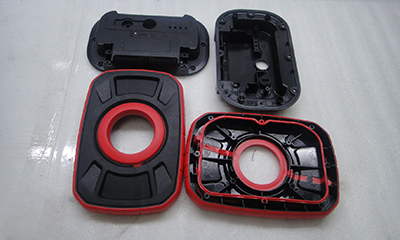
Rapid Injection Molding is the shortest path from a finished prototype to a real, sellable plastic part. Instead of waiting six to twelve weeks and paying for a hardened steel tool, you get an aluminium or soft mold in days and shoot parts in the final production material — the same resin your mass-production parts will use. If you need somewhere between a few hundred and a few thousand parts, or you need them before the steel tool is ready, rapid injection molding is almost always the most economical route.
What Is Rapid Injection Molding?
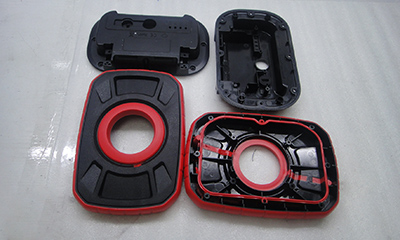
Rapid injection molding is conventional injection molding run through a rapidly built mold. The press, the process and the material are identical to mass production — only the tool is different. Because the cavity is cut from aluminium or cast from a soft material rather than machined from hardened steel, the tool is cheaper and much faster to make, at the cost of a shorter working life.
That single change is what makes the process so useful. It means the part you hold in your hand is not a look-alike sample — it is the production part, in the production resin, with the production surface finish. Wall thickness, gate marks, weld lines, warp and shrink behave exactly as they will at full volume, so what you validate is what you will ship.
It is often confused with other low-volume routes. Vacuum casting produces parts from a silicone mold and polyurethane resin; CNC prototyping cuts parts from a solid block. Rapid injection molding is the only one of the three that uses an actual injection mold and real thermoplastic pellets.
You will also see the same service described as rapid injection molding prototyping, rapid prototyping injection molding, rapid prototype injection molding, injection molding rapid prototyping, or — in British English — rapid injection moulding. These are not different processes. All of them mean a fast, low-cost mold used to shoot real thermoplastic parts. Where a machined sample already exists and the next step is a cavity, rapid prototype molding is the stage that turns that sample into a moulded part; and because it runs production resin rather than a substitute, rapid prototyping plastic injection molding gives you a component whose mechanical behaviour you can actually trust.
How the Rapid Injection Molding Process Works
The rapid injection molding process runs in four stages, and the first one happens before any metal is cut.
1. Design review and DFM
Every project starts with a design-for-manufacture review. We check wall thickness and uniformity, draft angle on every vertical face, gate location, ejector pin placement, undercuts that would need a side action, and any feature likely to cause a short shot, sink mark, weld line or warp. You get that report before tooling starts, so problems are fixed while they are still free to fix.
2. Tool design and machining
The mold is designed around your part and your volume: cavity count, runner type, cooling layout and steel selection for the frame. Aluminium cavities are machined in-house on our CNC machining centres, which is why the schedule holds — nothing is queued behind an outside tool shop. Complex geometry that cannot be milled is produced by EDM or, where it helps, by a printed insert.
3. First shots and sample approval
Once the tool is assembled we run the first shots (T1 samples) and send them to you with a dimensional report against your drawing. This is the point where you confirm fit, function and appearance. Small adjustments — polishing a surface, opening a gate, tuning the gate or cooling — are normal and quick on an aluminium tool, which is another reason the material is so well suited to low volume work.
4. Validation and production
After sample approval the tool goes into production. Parts are moulded, inspected and packed to your specification. If the product takes off, the same CAD data moves straight to a hardened steel tool later — nothing about the design has to change, and the rapid mold becomes your spare or backup.
Rapid Injection Molding vs Conventional Injection Molding
The parts are the same. What changes is the tool, and therefore the economics.
| Factor | Rapid injection molding | Conventional injection molding |
|---|---|---|
| Mold material | Aluminium or soft tooling | Hardened steel |
| Tool lead time | Days to a few weeks | Typically 6 to 12 weeks |
| Tool cost | Low | High |
| Typical volume | Hundreds to a few thousand parts | Tens of thousands and up |
| Design changes | Fast and inexpensive | Slow and costly |
| Part material and process | Identical to production | Identical to production |
The rule of thumb: below a few thousand parts, the total cost of rapid injection molding is usually lower than the amortised cost of a steel tool — and you get your parts months earlier. Above that volume the per-part economics flip, and steel wins.
Which Mold Material Fits Your Volume?
Rapid injection molds are not all the same. The material of the cavity sets the tool life, and the tool life should match the volume you actually need.
Aluminium molds
The default choice for rapid injection molding. Aluminium machines several times faster than steel, transfers heat efficiently (which shortens cycle time) and costs a fraction of a steel tool. A well-built aluminium mold typically runs a few thousand shots before wear becomes visible, and it can be repaired or re-machined if the design changes.
Soft tooling for injection molding
Where the volume is only a few dozen to a few hundred parts, or the geometry is too intricate to machine economically, soft tooling for injection molding — silicone, cast resin or polyurethane cavities — brings the tool cost down further. Soft tools wear faster, but for a first market batch, a trade-show run or a pilot build, the trade-off is usually worth it.
Steel production molds
Once the design is frozen and the volume is confirmed, the same part moves to a hardened steel tool. See our injection mold service for how 1K and 2K production tooling is handled, including the DFM report that precedes it.
Materials You Can Run in a Rapid Injection Mold
Because rapid injection molding uses a real mold and real pellets, the material range is the full thermoplastic range — not the restricted list you get with casting or 3D printing. Typical production resins include:
- ABS — the general-purpose workhorse for housings and enclosures.
- PC and PC/ABS — impact resistance and dimensional stability for structural parts.
- PP — living hinges, chemical resistance and low cost.
- PA (nylon), including glass-filled grades — strength and heat resistance for mechanical components.
- POM — low friction and high stiffness for gears, slides and precision parts.
- PMMA — optical clarity for lenses, light guides and display parts.
- TPU and TPE — soft-touch, flexible and overmoulded components.
Colour can be matched to a Pantone reference, and finishes range from high gloss to a moulded-in texture. If your part needs a specific cosmetic finish, see our materials and surface treatment options — and tell us early, because a texture is far cheaper to cut into the cavity than to add afterwards.
Advantages and Disadvantages of Rapid Injection Molding
It is worth being clear about both sides, because the process is not right for every project.
Advantages:
- Tooling in days or weeks rather than months — you reach market far sooner.
- A fraction of the upfront cost of a steel tool.
- Parts in the real production material, so testing is meaningful.
- Design changes are cheap, which suits products that are still evolving.
- Ideal for bridge production while a steel tool is being made.
- No minimum order quantity dictated by a steel tool's break-even point.
Disadvantages:
- Limited tool life — typically hundreds to a few thousand shots.
- Not economical once volumes reach tens of thousands of parts.
- Some very high-temperature or highly abrasive engineering resins wear an aluminium cavity faster.
- Very fine, deep textures are harder to hold than in hardened steel.
If any of the disadvantages apply to your project, the right move is usually to plan the steel tool now and use rapid injection molding only as a bridge — which is exactly what it is designed for.
Tolerances, Surface Finish and Part Quality
Part quality from a rapid injection mold is governed by the cavity, not by the fact that it is aluminium. General tolerances typically fall in the ±0.05 to ±0.10 mm range for common part sizes, with tighter control on specific features when they are identified as critical on the drawing. Because aluminium conducts heat faster than steel, cycle times are often shorter and cooling-related warp can actually be easier to control.
The one area to plan for is cosmetic texture. A polished or lightly textured cavity reproduces beautifully; a deep, aggressive grain is better suited to a hardened tool. Tell us the target finish at the quoting stage and we will confirm what the rapid mold can hold.
When to Choose Rapid Injection Molding
Rapid injection molding is the right call when:
- You need production parts in the real material and you need them now.
- Your volume is roughly 100 to a few thousand parts.
- You are launching, crowdfunding or listing a product and the market response is still unknown.
- The design may change after the first user feedback.
- You need a bridge batch to cover the lead time of a steel tool already on order.
- You need parts for certification, field trials or customer approval samples.
It is the wrong call when the volume is already known to be in the tens of thousands, or when the part must survive an abrasive, high-temperature duty cycle for years — in those cases go straight to a hardened production mold. If you are not sure which side of the line you are on, send us the annual volume and the part drawing and we will model both routes for you.
Frequently Asked Questions
How is rapid injection molding different from 3D printing?
3D printing builds a part layer by layer, usually from a limited range of materials. Rapid injection molding fills a real mold with real production pellets, so the part has production material properties, production surface finish and production cost per unit at volume.
Can I use rapid injection molding for the final product?
Yes. Parts from a rapid mold are production parts. Many products launch on an aluminium tool and only move to steel once volume justifies it.
How many parts will an aluminium mold make?
Typically a few thousand, depending on the resin, the part geometry and how the tool is maintained. For higher volumes we cut additional cavities or move the design to steel.
Is rapid injection molding more expensive per part?
The per-part price is usually a little higher than a steel tool running at full volume, but the total project cost is far lower at low volumes because the tooling investment is a fraction of the size. The break-even point is typically a few thousand parts.
What do you need from me to quote?
A 3D file in STEP, STP, IGES or X_T format, the expected volume, the resin, the surface finish and any critical dimensions. Send those and we will return a DFM report, lead time and price.
Conclusion
Rapid injection molding removes the two things that keep good products off the market — cost and time. It gives you real parts, in real production material, without the price of a steel tool and without the wait. For anything from a pilot batch to a few thousand units, it is the most direct route from a finished design to a product you can sell, test or ship. If you are weighing up rapid injection molding against rapid tooling or prototype model making, send us your 3D file and the volume you are planning, and our engineering team will tell you within 24 hours which route fits, what it will cost and how fast it can run. Contact us to start your project.